

Introduction
Every growing factory reaches this point eventually. Orders start coming in, floor space gets tight, and moving heavy material by hand is no longer an option. It is slow, increases the safety risks to workers, and slowly reduces productivity.
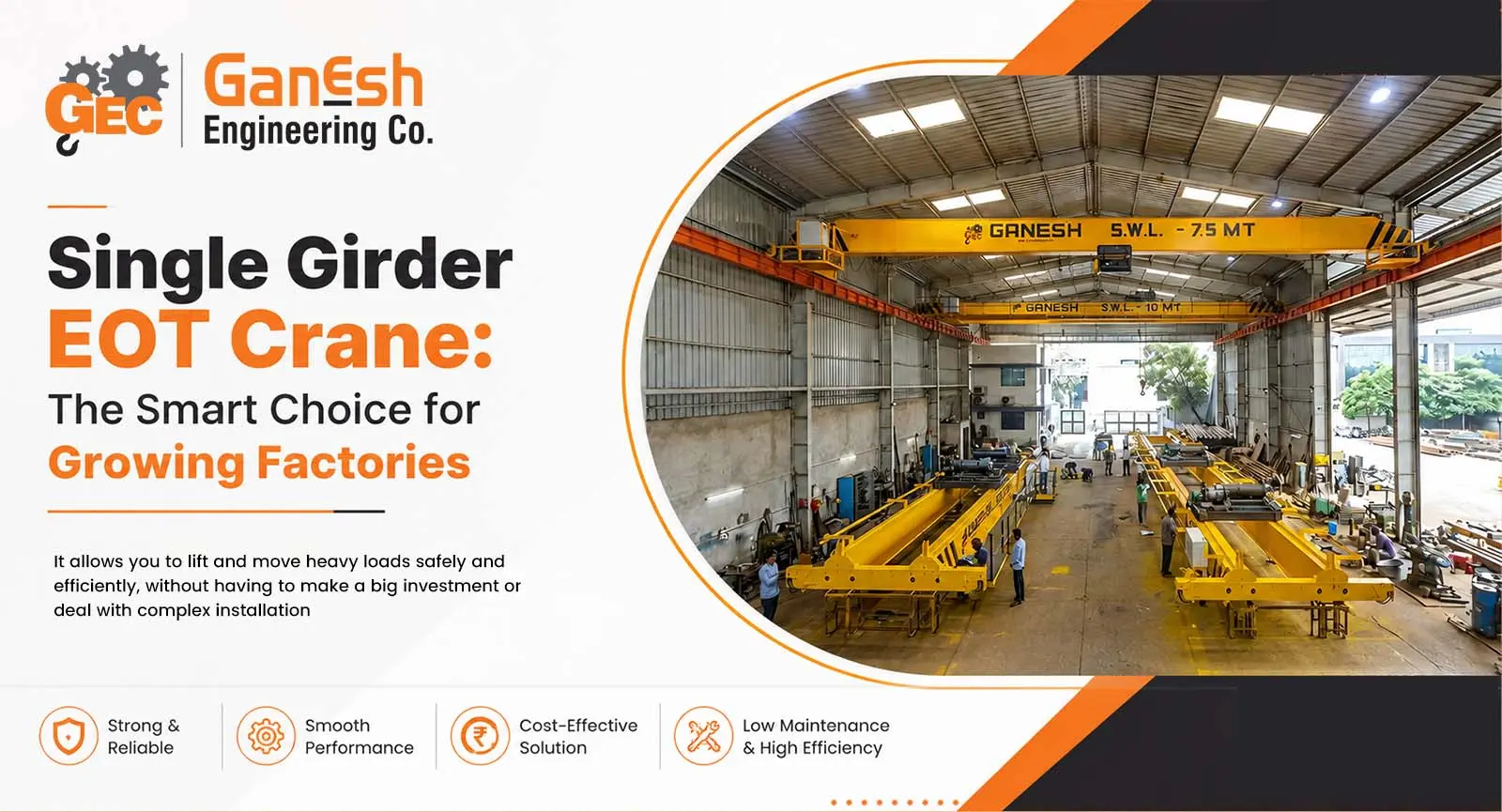
This is where a Single Girder EOT Crane is a practical solution. It allows you to lift and move heavy loads safely and efficiently, without having to make a big investment or deal with complex installation. For many companies, it’s a simple and reliable way to improve material handling and keep operations running smoothly.
Many business owners still think overhead cranes are only for big industrial setups. That’s not true anymore. These cranes have become a practical, everyday tool for factories at every stage of growth.
What Is a Single Girder EOT Crane?
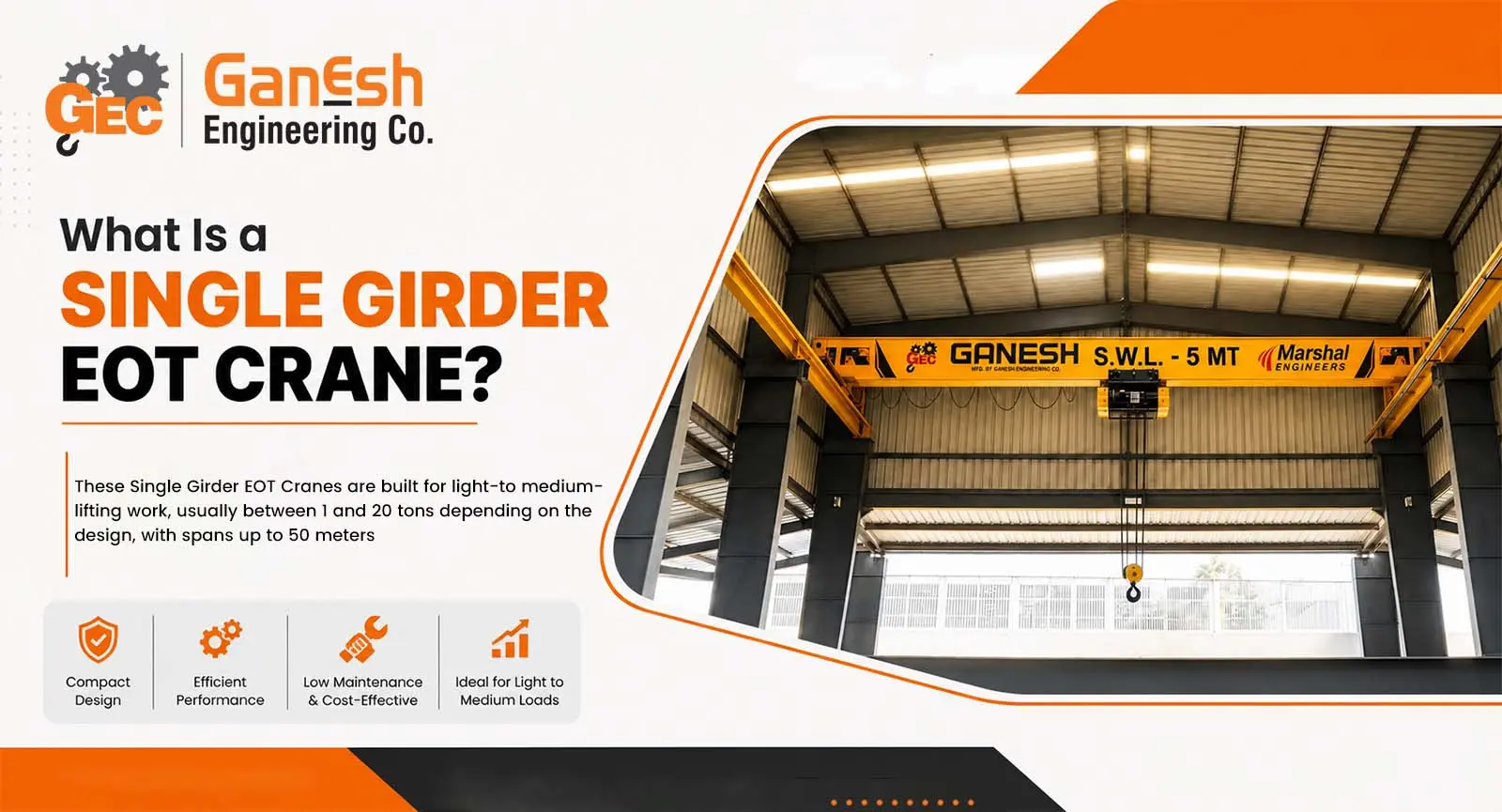
An EOT crane, short for Electric Overhead Travelling crane, runs along rails fixed to your building, lifting and moving material from one point to another. A single girder version uses just one main beam to carry the trolley and hoist, instead of two.
Because there’s only one beam, it puts less load on your building’s existing structure compared to a double girder setup. That one detail changes a bit, lighter installation, lower cost, and something that fits into a factory without needing major structural changes first.
When choosing a crane for your facility, it is equally important to compare different EOT Crane Manufacturers. A good manufacturer will not only provide good equipment, but will also assist you in choosing the crane that suits your lifting requirements, your workspace, and your future production requirements.
Why This Crane Keeps Showing Up in Growing Factories?
It’s Affordable
Since a Single Girder EOT Crane has fewer parts than a double girder crane, it costs less to build, install, and maintain. For a business watching its capital spend closely, that difference adds up fast.
Setting It Up Isn’t a Problem
Fewer moving parts also mean less time spent on installation, and fewer things that can go wrong down the line. For a factory that can’t afford long downtime while setting things up, this is the best solution for them.
It Covers Most Day-to-Day Lifting
These Single Girder EOT Cranes are built for light- to medium-lifting work, usually between 1 and 20 tons depending on the design, with spans up to 50 meters. For most factories and warehouses, that covers everything they need day-to-day without going overboard on capacity.
Many EOT Crane manufacturers also provide customization options to suit your factory layout, lifting capacity, and operational requirements. A manufacturer familiar with your application can assist in installation and improve the long-term performance of the crane.
Single Girder or Double Girder: Which One Fits
Worth understanding the difference before deciding, since both solve slightly different problems.
A single girder crane uses one beam, keeps the structure lighter, costs less, and works well for light to medium loads with standard headroom. A double girder crane uses two beams and is more useful when you need extra headroom or heavier lifting power.
If your factory’s daily lifting stays in that light-to-medium range, a single girder option is usually the more sensible, budget-friendly pick.
Things Worth Checking Before You Buy?
Before you decide on a Single Girder EOT Crane, it helps to slow down and look at the everyday details that actually affect how the crane will perform in your factory. A good purchase is not just about price; it is about whether the crane matches your work. These are the following things that you need to check once before you buy this crane:
- Check your typical load weight and make sure the weight is within the crane’s rated capacity.
- Look at the span you need on the shop floor, because the crane should fit your space properly, not just your load.
- Confirm the lift height you actually require, especially if your material has to move to a higher level or over equipment.
- Ask whether the manufacturer builds to recognized standards such as IS: 807 or IS: 3177, because proper standards usually mean more confidence in the build.
- Find out about the type of after-sales support provided post installation, including service help, maintenance guidance, and response time.
It is also worth comparing a few EOT Crane Manufacturers before you make your final decision. Don’t just look at the price tag. Look at the manufacturer’s experience, quality, customisation, certification, customer service, and other factors. These factors often make a bigger difference over the crane’s lifetime than the initial purchase cost. That last point often gets overlooked, but it matters a lot. A crane is not something you buy and forget; it becomes part of your daily work, so the support behind it can make a difference over time.
Conclusion
A Single Girder EOT Crane isn’t about looking impressive on the factory floor. It’s about solving everyday problems without overspending or overcomplicating things. For most growing factories, it strikes that balance between cost, capacity, and reliability pretty well. If you’re weighing your options right now, it’s worth talking to Ganesh Engineering Co. directly about what your factory actually needs, so you end up with a crane that fits your operations, not just one that looks good in a catalog.
FAQs

Ganesh Engineering
Ganesh Engineering Co. has been a leading manufacturer of Materials Handling Equipment in India since 2004. In order to provide top-notch products and services, our experienced and dedicated team utilizes the latest technology to achieve perfection.