

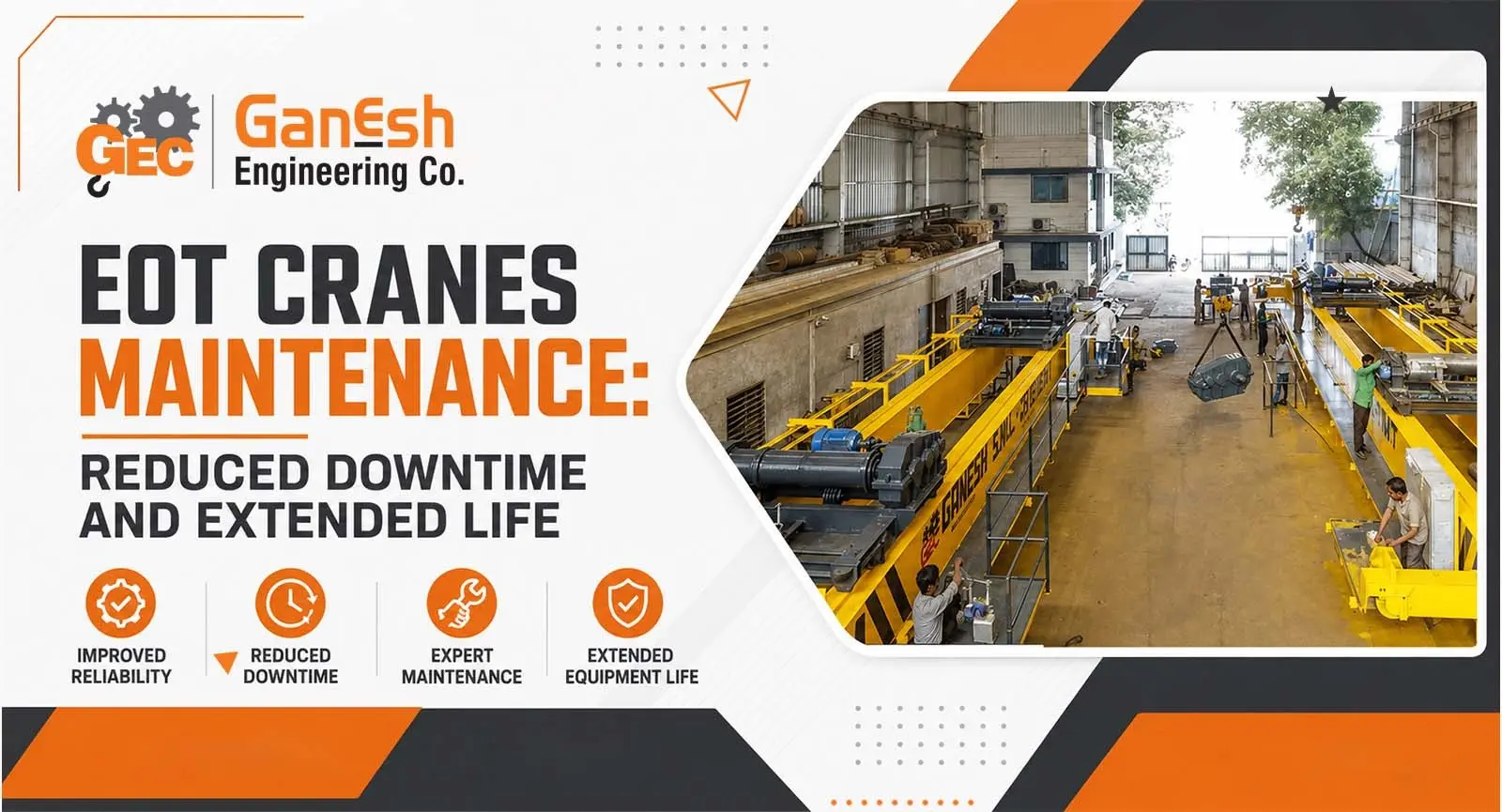
Proper care is the main thing if you want an EOT Crane to stay up more often and work longer, too. The main goal is to make sure it lifts properly, holds steady, and keeps working safely under real shop conditions. That matters because an overhead crane is not something you want to run on guesswork.
The Real Value of Keeping EOT Cranes in Good Shape
An EOT crane handles heavy loads, so even a small problem can quickly become a serious issue. Regular care helps spot trouble in the crane, hoist, brakes, ropes, gears, and other key parts before they start causing breakdowns. It also gives the crew a better sense of how the crane behaves when it is under load day in and day out.
When EOT Cranes are left unattended or maintained badly, it can easily result in delays, and damage to the equipment, and sometimes accidents. That is why maintenance is not just a formality. It is part of safe lifting work and solid plant discipline. When care is done properly, both operators and maintenance staff can work with more confidence.
What a Good EOT Cranes Maintenance Routine Looks At?
Maintenance is usually carried out to see how the crane performs with no load, with rated load, and sometimes near overload, depending on the site and the plan. The crane should be inspected for:
- Lifting performance and smoothness
- Brake holding and stopping action
- Movement of the bridge and trolley
- Any unusual noise, vibration, or heat
It also helps confirm whether the structure stays steady under load. A little flex is normal, but too much can signal a problem in the girder, hook, rope, or brakes. So regular checks help show whether the crane is staying within safe limits.
The EOT Cranes are not being maintained only for its lift capacity. The routine also checks how smoothly it lifts, how firmly it stops, and how well it grips the load. Those small details matter a lot in everyday use.
A Simple Routine for EOT Crane Care
A solid maintenance routine usually begins with a full visual inspection. Check the hooks, ropes, brakes, limit switches, electrical parts, and structural joints. The area must be clear, with only trained people nearby. If something looks wrong before maintenance starts, fix it first.
A common sequence goes like this:
- Begin with a no‑load check to see basic movement.
- Then test the crane at its rated load.
- If required, carry out a static load test.
- Finish with a dynamic test to see how the crane moves with load on.
The no‑load check simply shows whether the crane runs smoothly without weight. The rated load test confirms normal capacity. Static testing centers on keeping everything steady, while dynamic testing centers on how the crane moves once it has the load on.
The idea behind this order is to catch problems early. If the crane has issues in a basic check, there is no point jumping straight to heavier tests.
Keeping Safety Tight During Maintenance Work
Safety must stay strong through the entire process. The maintenance zone should be marked off. No one should stand under the load. All test weights and lifting gear must be certified and in proper condition. If the operator or inspector notices anything odd, work must stop immediately, right then
The crew should watch for brake slip, uneven lifting, noise, shaking, or any sign the crane is not behaving normally.
Maintenance should never feel rushed. The crew needs time to observe the crane properly. If the load sways too much, if the hook acts strangely, or if the crane does not travel as expected, that needs attention right away.
Mistakes That Often Come Up
Some mistakes happen quite often. One is starting maintenance without a proper inspection first. Another is using uncalibrated test weights or weak rigging gear. Skipping records is also a bad habit, since results should always be written down and kept for future reference.
Rushing through the process is another issue. Maintenance is not something to finish quickly just to move on. It should be done carefully, with enough time to see how the crane behaves at each stage. Cutting corners here usually creates more work later.
Weak communication is also a problem. Everyone on the job should know when the crane is moving, when the load is held, and when maintenance is complete. A little coordination saves a lot of confusion.
Smart Habits for Long‑Term Crane Health
Keep the maintenance zone clear and well marked. Use only trained people. Follow the manufacturer’s load limits. Check brakes, switches, rope condition, and structural parts before and after each maintenance session. Record what happened, even if the crane passed without issues.
It is also wise to retest after major repair, structural change, or long periods of non‑use. That keeps the crane’s condition clear and avoids guesswork later. A crane may look fine from a distance, but a proper check tells the real story.
Regular inspections between full maintenance cycles also help. If the crane starts making strange noises, moving unevenly, or holding poorly, that should be investigated before the next scheduled test. Small signs often appear before bigger faults show up.
Trusting the Crane on the Shop Floor
When maintenance is done properly, the crane becomes easier to trust on the shop floor. Operators know what to expect. Maintenance teams know where the weak points are. And the plant can move material with more confidence.
That is the real value of maintenance. It is not about making the crane look good for one day. It is about knowing the crane is ready for the work it must do every day after that.
FAQ
Q1. Why does the maintenance zone matter?
Q2. What should be inspected before starting maintenance?
Q3. When should a crane be retested after maintenance?
Q4. What is the main purpose of EOT crane maintenance?
Q5. What is the difference between static and dynamic testing?

Ganesh Engineering
Ganesh Engineering Co. has been a leading manufacturer of Materials Handling Equipment in India since 2004. In order to provide top-notch products and services, our experienced and dedicated team utilizes the latest technology to achieve perfection.