
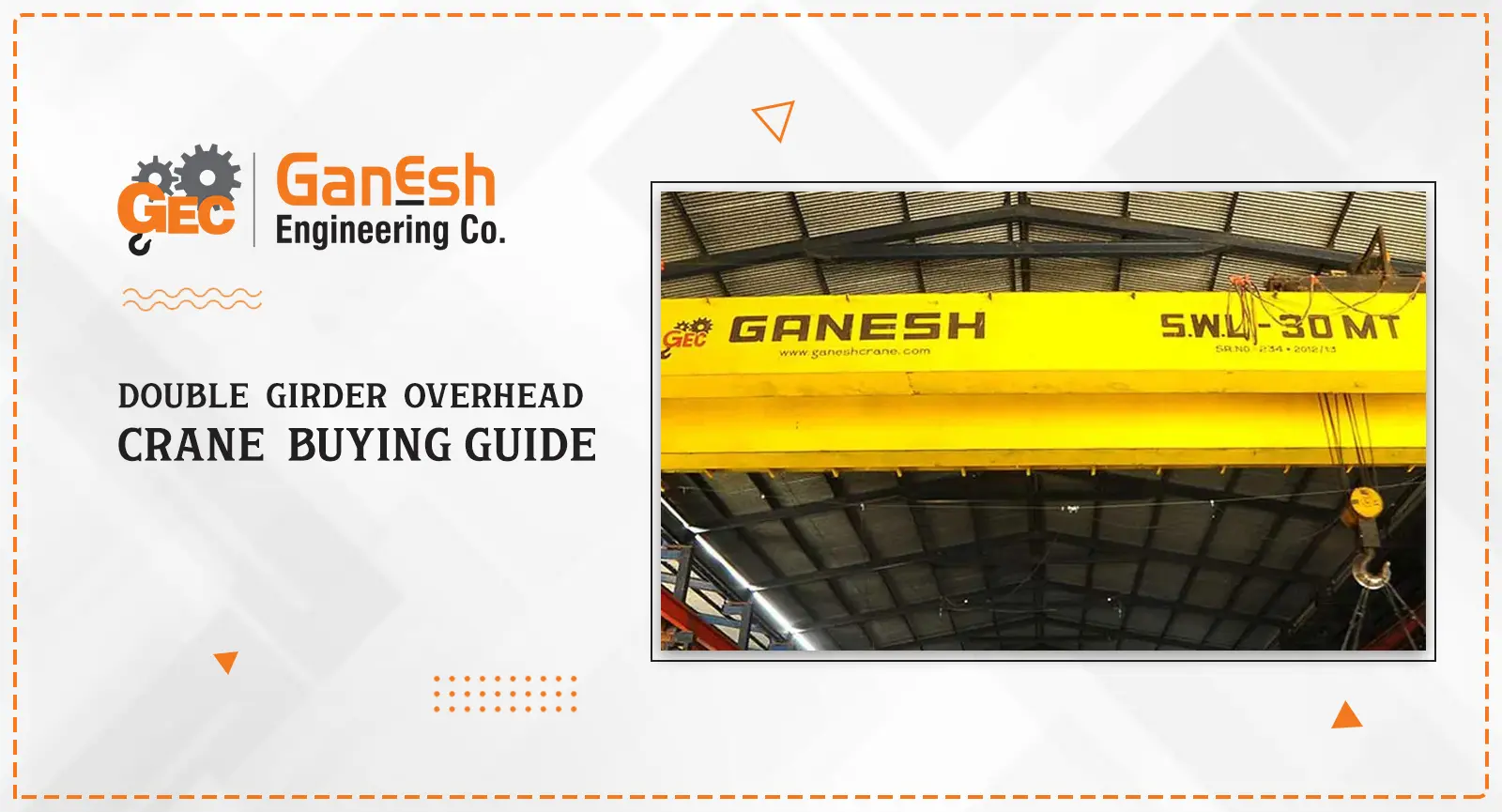
When your business starts moving heavier loads, basic lifting equipment just doesn’t work anymore. You reach a point where you need more power and more stability to keep things moving safely. But picking a crane isn’t just about how much weight it can move. It’s about making sure your team stays safe, your workflow stays smooth, and you aren’t constantly paying for repairs. We’ve seen many businesses making a purchase without a clear plan, only to realise later they’ve overspent or bought a machine that can’t keep up with their daily pace. If you’re ready to level up your facility, a Double Girder Overhead Crane is often the smartest choice. Here is why:
What Is a Double Girder Overhead Crane?
This overhead crane is a heavy-duty lifting system that uses two parallel girders to support the hoist and trolley. It is designed for higher capacities and wider spans compared to single girder models.
• Extra Lifting Room
Since the hoist sits on top of the beams instead of hanging under them, you get much more height to lift tall gear, even if your ceiling is low.
• Rock-Solid Control
Two beams are much steadier than one, which stops your load from swinging and makes the whole job feel a lot safer for your team.
• Greater Lifting Height
A Double Girder Overhead Crane allows more hook height, which is useful in tall industrial buildings.
In many industries, it is also referred to as an EOT Crane (Electric Overhead Travel crane), especially when it operates on electric power across the workshop.
When Should You Choose a Double Girder Crane?
Not every factory needs a double-girder crane. It is mainly suitable for specific heavy-duty requirements.
• Heavy Material Handling
If your daily work involves massive items like steel coils, engine blocks, or heavy molds, you need this extra muscle.
• Large Workshop Area
If your building has a lot of open space between the support columns, this setup stays steady and safe across those long distances.
• Continuous Operations
If lifting operations occur throughout the day, a heavy-duty EOT Crane ensures smoother, safer performance.
Choosing this crane makes sense when your lifting needs go beyond basic operations.
Key Factors to Check Before Buying
Investing in a Double Girder Overhead Crane is a big step for any business. These machines are the workhorses of the industrial world, but to get the best return on your investment, you need to make sure the specs actually match your daily reality.
Before you sign off on a purchase, here is a quick, plain-English checklist to help you get it right.
1. Don’t Cut it Too Close on Weight
It’s tempting to buy a crane that matches your heaviest load exactly. However, pushing a machine to its absolute limit every day wears out the motor fast.
- The Pro Tip: Choose a capacity slightly higher than your heaviest lift. It gives the crane a “buffer,” meaning less maintenance and a much longer lifespan.
2. Measure Your “Span” (The Gap)
The span is just the distance between the two rails that the crane runs on. In a large workshop, even a small difference can affect performance. When selecting a Double Girder Overhead Crane, getting the span measurement right is very important for smooth and safe operation.
- The Goal: Make sure the crane fits your building’s structure perfectly. A precise fit ensures the crane moves smoothly without vibrating or putting stress on your building’s beams.
3. Maximise Your “Headroom”
The best part about a double girder design is that the hoist sits on top of the beams, not underneath them.
- The Advantage: This allows the hook to travel much higher toward the ceiling. If you have a low roof but need to stack materials high, this design is your best friend.
4. Be Honest About Your Workday
Will the Double Girder Overhead Crane be used occasionally, like once an hour, or will it run continuously across all three shifts?
- The Reality: A crane that works around the clock needs a much tougher motor than one used occasionally. Be realistic about your shift patterns so you don’t end up with a system that overheats during a busy week.
5. Safety Isn’t an “Optional Extra”
On a busy shop floor, you want a machine that has your back. At a minimum, ensure your crane includes:
- Overload Protection: A “brain” that stops the lift if the load is too heavy.
- Limit Switches: Invisible walls that stop the crane automatically before it hits the end of the track.
- Emergency Stops: Big, red, and easy to hit if something goes wrong.
Conclusion
Choosing a Double Girder Overhead Crane is a big investment, and it’s one you want to get right the first time. It’s not just about moving steel; it’s about keeping your team safe and your shifts running without a hitch. By matching the crane to your shop’s actual pace and floor space, you’re buying more than equipment; you’re buying years of reliability. With trusted manufacturers like Ganesh Engineering Co., you can be confident you’re investing in quality and long-term performance. Invest in the right setup now, and you’ll have a powerhouse that grows with your business.
FAQs
1. Single vs. Double Girder: What’s the difference?
It comes down to power and height. Single girder cranes are great for standard loads and saving money. Double girder cranes are built for much heavier lifting and let you pull the load higher up toward the ceiling.
2. Can I use an EOT crane in a small factory?
Yes! Double Girder Overhead Cranes are great for saving floor space. If you’re doing heavy-duty work in that small space, a double girder version is usually the safest and most reliable choice.
3. How do I choose the right lifting capacity?
Always go a bit bigger than you think. If your heaviest load is 10 tons, choose a crane with a slightly higher limit. This prevents “straining” the machine and keeps your team safe.

Ganesh Engineering
Ganesh Engineering Co. has been a leading manufacturer of Materials Handling Equipment in India since 2004. In order to provide top-notch products and services, our experienced and dedicated team utilizes the latest technology to achieve perfection.